

























Excerpts from issue 53/20 20 July 2026

Suntory donates £100,000
As reported in previous issues, the Mactaggart Leisure Centre (MLC) is marking its 35th anniversary with a major programme of upgrades, now supported by a £100,000 charitable donation from Suntory Global Spirits, owner of the Leisure Centre's next door neighbour, Bowmore Distillery, as well as Port Ellen's Laphroaig Distillery.
For more than three decades, MLC has provided a welcome hub for sport, health and community life on Islay. Its anniversary year now signals the start of a new chapter, with improvements designed to modernise facilities, strengthen operations and enhance the overall experience for the community.
This upgrade programme will include a complete gym refit with new equipment and improved layout, along with refurbishment of the main changing rooms, new shower units and upgrades to the sauna wet wall.
All the above will accompany improvements to pool operations, including a new automatic dosing system, energy efficiency upgrades through variable speed drives, and continued investment in staffing and day-to-day operational support.
The changes will address long-standing challenges and help ensure the Mactaggart Leisure Centre remains a reliable and welcoming place to visit.
While some disruption is expected as work gets underway, every effort will be made to minimise impact and keep the centre open wherever possible. Updates will be shared regularly.
Manager, Karen Donnelly, told the Ileach, "The Leisure Centre has been at the heart of the Islay community for 35 years, thanks to the dedication of its team and the people who use it every day. Suntory Global Spirits has been a long-standing supporter, but this one-off donation will significantly enhance how we’re able to serve the communities of Islay and Jura.
"We're so grateful to all the volunteers, staff, and donors who have worked tirelessly to build a solid, 35-year foundation."
Chris Richardson, Managing Director of Scotch and Irish at Suntory Global Spirits, said, "We've been working for some time on how we give back to the communities where our teams live and our distilleries operate, so we're incredibly proud to support the Mactaggart Leisure Centre in its 35th year, acknowledging how important it is to the communities of Islay and Jura.
"Bowmore and Laphroaig Distilleries have been part of the fabric of island life for generations, and this historic fundraising effort helps us ensure that legacy continues."
...........................................................................................................................................................................................................
Islay House open afternoon

The owners of Islay House would like are inviting the local community to an open afternoon on Tuesday 28 July, from 2pm until 6pm.
"We are currently in the planning and development stages of restoring Islay House and its grounds, and before work begins we'd like to share our vision with the community, answer questions, and hear your thoughts.
"This will also be a rare opportunity to visit parts of Islay House that are not normally open to the public and to see the building as it stands today before its restoration begins.
"Plans and illustrations will be on display throughout the afternoon, and members of the project team - including the owner, our interior designer, and the management team - will be available to discuss the proposals, explain our thinking, and answer any questions you may have.
"We would also love to hear your own memories and stories of Islay House. Many people on Islay have a connection with the house or the estate, and those memories form an important part of its history. If you have old photographs, documents, or stories to share, we'd be delighted to hear from you.
"Whether you're simply curious to look around, interested in the restoration, or would like to learn more about our long-term vision for Islay House, we hope you'll come along.
Tea and coffee will be available throughout the afternoon, and there is no need to book - just drop in at any time between 2pm and 6pm".
...........................................................................................................................................................................................................
In this week's issue:
Bowmore Sports Day in the rain, Dredging at Port Ellen, CMAL buys its boats, Man arrested for threatening with a weapon, Suntory donates £100,000 to Mactaggart Leisure Centre, Councillor Redman against MachairWind, Islay Community Council, Fiona McCusker, Student of the Year, Jamie MacTaggart Memorial winner, New Screen Machine, Gaelic church service, Sidekick donation, Port Ellen's Blue Letterbox celebrates ten years and Windswept Farm Shop celebrates one year, Hebri-bees project, Islay House Open Afternoon, Rainer's covered wagon, Cantilena returns, Ardtalla and Dunlossit win awards, Islay Running Club, Book Review: Life is a Lie - Alasdair Wham, Music Review: Prime Plays Standards, Road closures ahead, Highland Dancing in Ireland, Two American visitors have a taste of Islay hospitality, brian palmer takes an Islay Sea Adventures Wildlife trip.
...........................................................................................................................................................................................................
Book review
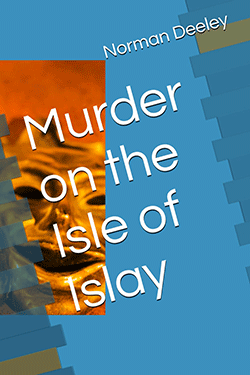
Life is a Lie. Alasdair Wham. Greenan Publishing paperback. 329pp £10.99
Alasdair Wham has appeared in these pages on at least three previous occasions, as the author of Machir Bay, The Oa, and Bac Mor, all of which featured Islay to a greater or lesser extent as the scene of their thrilling denouements.
Though Islay is tangentially mentioned in 'Life is a Lie', the setting has strayed not too far, when we meet Billy Baxter disembarking the train at Ardrossan station, heading to the CalMac ferry that will take him to Arran.
We can guess, from his movements, and the reference to the alliterative nature of his two initials, that Billy Baxter might not be his real name, and that he'd really rather keep himself to himself.
That apprehension is reinforced when he wires up surveillance cameras in the short-term let he is to occupy in Blackwaterfoot.
Billy is in witness protection, as a result of informing on his uncle Dean's nefarious business dealings. In his late teens, Billy had been offered a position at Walter Ancell and Company, haulage contractors, in Glasgow, assisting Frankie in transporting machinery and parts to Aberdeen.
His uncle Dean also worked for the firm as an executive, taking over the business when Mr Ancell succumbed to a heart-attack.
Under Dean's leadership, things began to change at Ancell's and not for the better. Though claiming the company had been in financial straits and thus in need of investment, Billy's uncle seemed to be living a highly comfortable life, with luxury cars and a sizeable house.
Nonetheless, Baxter had keeps his head down, works diligently as a result of being encouraged to take an interest in the accounts, and readies himself for promotion.
Given reputedly specialist jobs to undertake due to his apparent trustworthiness, he soon finds himself with Mairi Miller, a girlfriend met during a hotel stop, and whom he ultimately marries.
But an incident with a police search of his vehicle, while naively carrying out one of those 'specialist jobs', with a pregnant Mairi by his side, turns his life, his career and his marriage upside down.
But his subsequent life in witness protection does not proceed as straightforwardly as the reader might hope. It transpires that the officer in charge of witness protection, may be less concerned with Billy's protection than his job title suggests.
Could it be that someobody is still out to get him?
Alasdair Wham continues to produce compulsive narratives that simply demand that you read 'just one more chapter. And then one more'. And he has an uncanny knack of transporting the tale elsewhere, just to add another thread to the story, all wrapped in commendably short, sharp chapters.
For instance, at the start of chapter four, having left Billy in the cottage on Arran, we meet Zoe on the east coast of Australia. Who is she? And what does she have to do with a Glasgow boy in witness protection back in Scotland?
On getting clear of Arran and heading to the South of Scotland, keeping out of reach of the dubious witness protection officer, why does he stop in Glentrool? And who is Michelle?
An intriguing and exciting tale.
bp
'Life is a Lie' is available from the Celtic House, Bowmore.
...........................................................................................................................................................................................................
This is Islay

2026 Podcast of the Year featuring individuals, personalities and features of Islay and Jura. Listen now at https://anchor.fm/thisisislay
...........................................................................................................................................................................................................
to subscribe or advertise, contact ileach@ileach.co.uk